Jakarta: Indonesia is strengthening its position as a major player in the global Islamic economy. According to the latest State of the Global Islamic Economy Indicator Report 2025, Indonesia ranks third in the global Islamic finance ecosystem.
The achievement marks three consecutive years in which Indonesia has maintained its standing among the world’s strongest Islamic economic ecosystems, alongside Malaysia and Saudi Arabia.
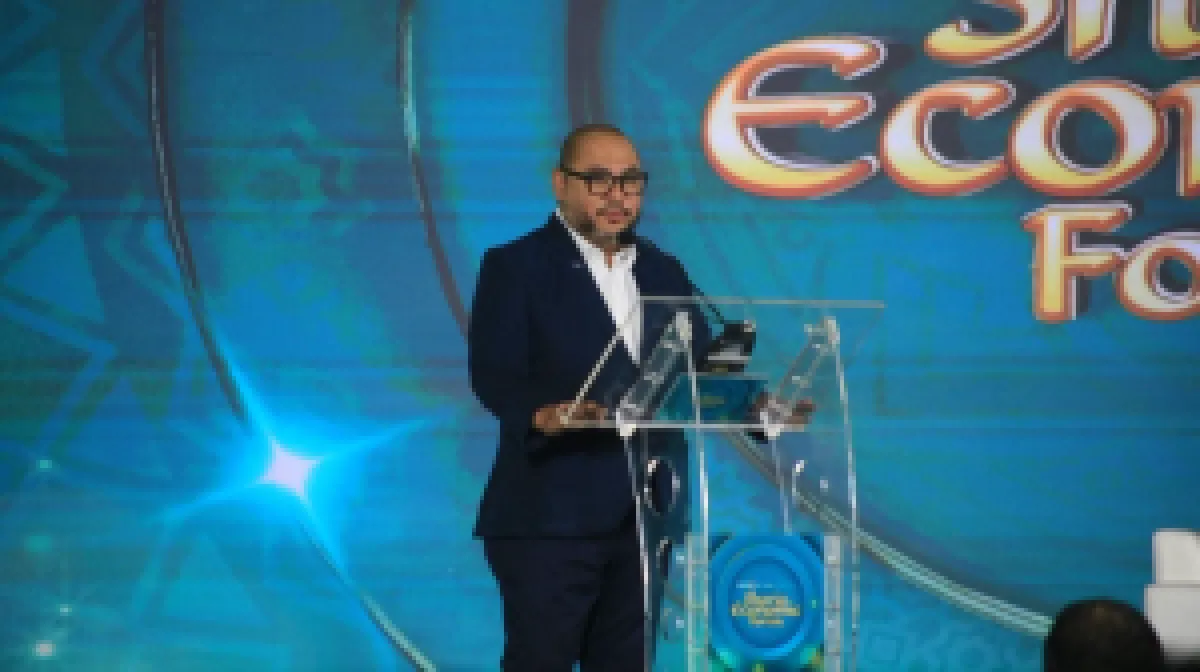
Speaking at the Sharia Economic Forum titled “Accelerating Growth and Prosperity: Path to Global Impact,” Media Group CEO Mohammad Mirdal Akib said the milestone serves as a strategic foundation for Indonesia to advance further. The report assesses countries across seven key sectors, ranging from halal food to modest fashion.
“The report evaluates the performance of countries in seven main sectors: halal food, Islamic finance, Muslim-friendly tourism, modest fashion, halal cosmetics and pharmaceuticals, media and recreation, as well as halal investment,” Mirdal said on Thursday, February 12, 2026.
In light of the positive trend, Mirdal emphasized that it is time for Indonesia to move forward and position itself as a global leader in the Islamic economy. His optimism is supported by significant economic data. Global Muslim consumer spending has reached USD2.43 trillion (around Rp40,000 trillion) and is projected to grow to USD3.36 trillion by 2028.
“Based on the State of the Global Islamic Economy Indicator Report 2023, global Muslim consumer spending reached USD2.43 trillion, or approximately Rp40,000 trillion, and is projected to increase to USD3.36 trillion, or around Rp55,000 trillion, by 2028,” he said.
Beyond consumption, global Islamic financial assets have reached USD4.93 trillion, with growth potential estimated at USD7.53 trillion in the coming years. These figures signal that the Islamic economy is no longer a complementary sector but a massive market shaping the direction of the global economy. Government Efforts to Strengthen the Islamic Economy Mirdal noted that the government has responded to this opportunity by integrating Islamic economic policies into the National Medium-Term Development Plan (RPJMN) 2025–2029 and the National Long-Term Development Plan (RPJPN) 2025–2045. The strategy focuses on strengthening the real sector of the halal industry and optimizing Islamic social finance.
“The government has integrated Islamic economic policies into the RPJMN 2025–2029 and RPJPN 2025–2045, focusing on the halal industry’s real sector and Islamic social finance. Becoming a global leader in the Islamic economy is strategic for Indonesia, as the global Islamic economy represents a massive market,” he said.
However, Mirdal cautioned that achieving this ambition will require collective effort. This includes strengthening the ecosystem through policy synergy, developing skilled talent in Islamic finance and halal industries, accelerating financial digitalization, and enhancing public literacy to ensure broad-based prosperity for all Indonesians.
Indonesia Has Opportunity to Become Global Leader in Islamic Economy: Media Group CEO