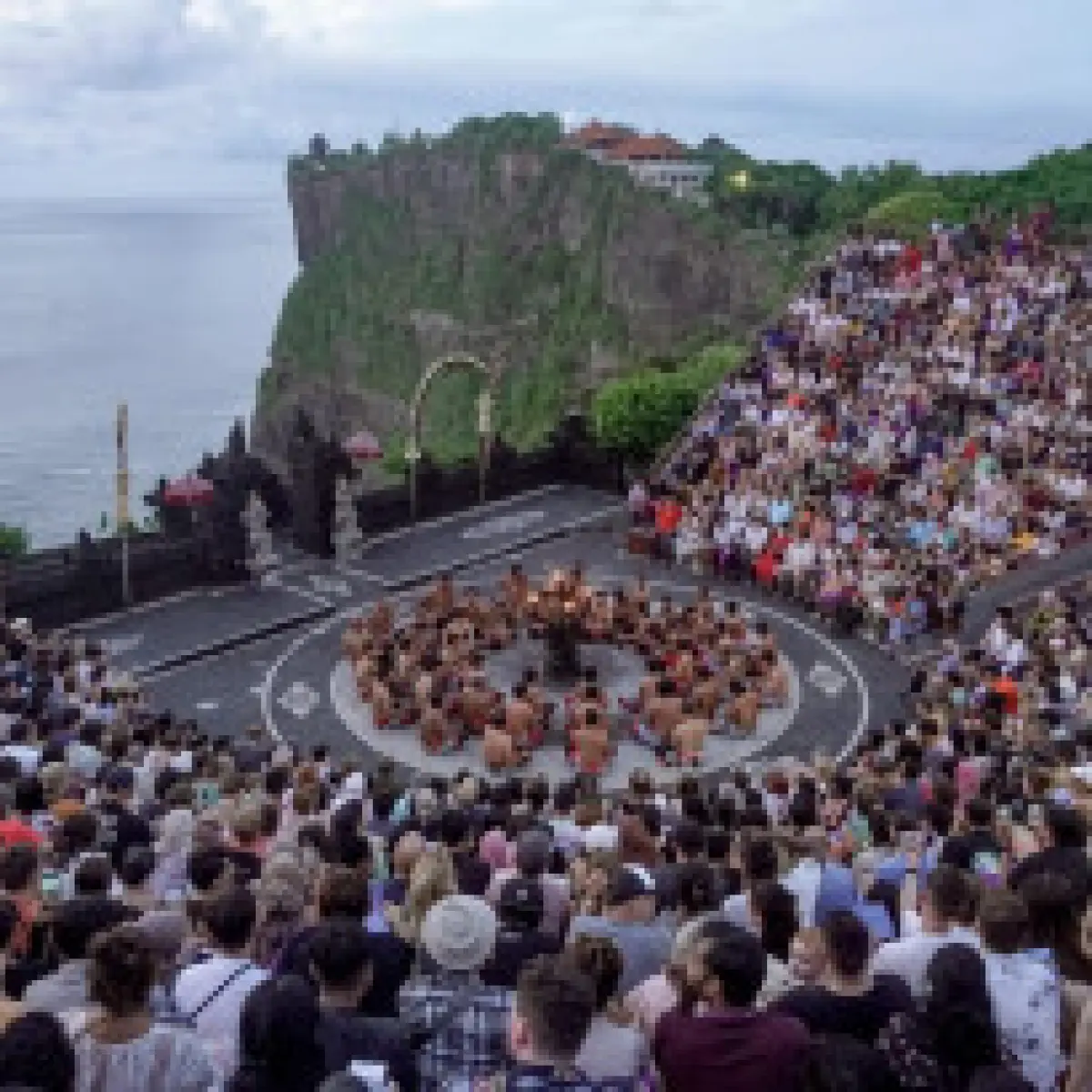
For decades, Bali has been Indonesia’s window to the world—a place where culture, hospitality, and global connection meet. Today, we are presented with an opportunity to elevate that role. The idea of establishing an Indonesia Financial Centre (IFC) in Bali is not merely about finance. It is about redefining how Indonesia connects global capital to real economic value.
We are living in a time of shifting global dynamics. Capital is no longer loyal to geography; it is loyal to trust, stability, and opportunity. Investors—particularly family offices and long-term capital holders—are actively searching for jurisdictions that offer not just returns, but certainty and meaning. In this context, Indonesia has a compelling proposition, but it lacks a dedicated platform to capture and channel that capital effectively.
This is where the IFC in Bali becomes strategic.
The temptation, of course, is to replicate models like Singapore or Dubai. But that would be a mistake. Indonesia should not aim to imitate; it should aim to differentiate. Bali offers something those centres do not: a unique convergence of global lifestyle appeal, cultural depth, and proximity to one of the world’s most dynamic emerging economies.
The IFC must therefore be built not as a tax haven, but as a trust platform.
Trust is not created through incentives alone. It is built through credible institutions, transparent governance, and clear legal frameworks. Without these, no amount of fiscal attractiveness will sustain long-term capital inflows. With them, however, Indonesia can position itself as a neutral and reliable hub in an increasingly fragmented world.
But attracting capital is only half the equation.
The true measure of success lies in how that capital is deployed. Indonesia does not need a financial centre that merely accumulates wealth; it needs one that mobilizes it. The IFC in Bali should function as a value consolidation platform—bringing together global funds and directing them into sectors that matter: tourism infrastructure, MSMEs, renewable energy, and the digital economy.
Imagine a system where a family office based in Bali can seamlessly invest in sustainable tourism projects in Labuan Bajo, support small businesses in Java, or finance green infrastructure across the archipelago. This is not just financial intermediation; this is nation-building through capital allocation.
At the same time, we must be mindful of balance. Bali is not an empty canvas. It is a living ecosystem with cultural, environmental, and social sensitivities. The development of an IFC must align with sustainability principles, ensuring that growth enhances rather than erodes Bali’s identity.
In this sense, governance becomes critical—not only financial governance, but environmental and cultural stewardship.
Indonesia stands at a crossroads. We can continue to rely on external financial hubs to intermediate our growth, or we can build our own platform—on our own terms. The IFC in Bali is an opportunity to do the latter.
If designed correctly, it will not only attract global capital. It will reshape Indonesia’s position in the world economy—from a destination of consumption to a hub of value creation.
Bali has always been a bridge between Indonesia and the world. It is time to extend that bridge—from tourism to finance, from experience to investment, and from presence to partnership.